



Fact sheet: Song: “Rock of Ages”. Author: Augustus Montague Toplady (1740–1778). Year: 1763 (published between 1775 and 1776). Best-known tune: “Toplady,” by Thomas Hastings (1830).
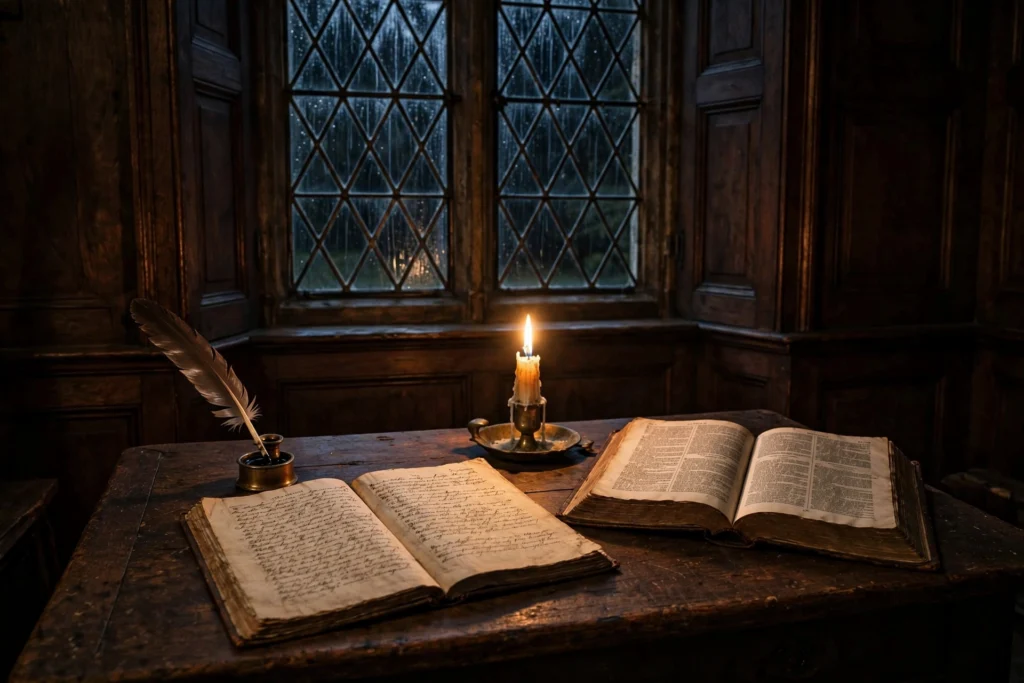
The context: the boy who lost his father and found his rock
Augustus Montague Toplady was born on November 4, 1740, in Farnham, England, and he barely got to know his father. Richard Toplady, an Irish officer of the Royal Marines, died of yellow fever during the war England was waging against Spain, and his mother Catherine had to raise him alone. She took him to London so he could study at Westminster School between 1750 and 1755, and then they moved to Ireland, where the boy entered Trinity College Dublin.
It was in Dublin, in August 1755, at just fourteen years old, that his life changed forever. He heard a sermon by James Morris, a follower of John Wesley, and in his own diary he recorded that he had been awakened by God that month — and he took care to clarify, with a honesty that would stay with him all his life, that he had not been awakened under Wesley’s preaching nor under any preacher connected with him. At eighteen, reading Dr. Manton’s sermons on chapter 17 of the Gospel of John, his convictions took a decisive turn: he himself wrote that his Arminian prejudices received “an effectual shock,” and he became a convinced Calvinist. That theological turn would mark everything that followed, including the hymn we are telling about today.
Toplady was a frail young man, thin-bodied and delicate in health, but with an intensity that burned. He published his first book, Poems on Sacred Subjects, in 1759, while still a student. He graduated in 1760 and surrounded himself with the great Calvinist preachers of his time: George Whitefield, John Gill, and William Romaine influenced him deeply. In 1762, the Bishop of Bath and Wells ordained him deacon and appointed him curate of Blagdon, a rural parish among the Mendip Hills in Somerset. He was twenty-two and already carrying the disease that would follow him to the grave: tuberculosis.
But if anything defines Toplady’s life, besides his hymn, it is the fight. A nine-year theological fight (1768–1778) against none other than John Wesley, the founder of Methodism. Toplady published The Church of England Vindicated from the Charge of Arminianism in 1769 and, in 1774, his monumental Historic Proof of the Doctrinal Calvinism of the Church of England, defending that salvation is by grace alone. Wesley answered, the debate turned personal and bitter, and in a letter dated June 24, 1770, Wesley wrote of him: “I do not fight with chimney-sweepers. He is too dirty a writer for me to meddle with.” He never married, never had children; he had the pen, the pulpit, and an iron conviction about the grace of God.
The turning point: the storm, the cleft, and what we actually know
Here the story must be told honestly, because this hymn has two versions of its birth: the one tradition tells and the one documents prove.
Tradition says that in 1763, while curate of Blagdon, Toplady was walking through the Burrington Combe gorge in the Mendip Hills when a violent storm caught him. With no other shelter in sight, he slipped into a cleft in the limestone rock to wait out the downpour, and there, amid the crashing thunder, the first words of the hymn came to him: “Rock of Ages, cleft for me, let me hide myself in Thee.” The cleft where he supposedly took shelter truly exists: today it is a tourist attraction known as the “Rock of Ages,” commemorative plaque included.
But hymnologists warn of something important: that story first appeared 122 years after the hymn’s publication, in a letter published in the Times of London on June 3, 1898, based on the testimony of Sir W. H. Wills. There is no contemporary evidence — neither in Toplady’s diaries nor in his letters — that the storm ever happened. Most historians regard it as a beautiful legend, not a fact.
What is documented is this: Toplady wrote the hymn in 1763. The first four lines of the first verse were published in The Gospel Magazine in October 1775; the complete version appeared in March 1776, with the first verse revised and three more stanzas; and in July 1776 he included it in his hymnal Psalms & Hymns for Public and Private Worship. And the biblical roots of the hymn are beyond dispute: the phrase “rock of ages” comes from a marginal note in the King James Bible on Isaiah 26:4, and the image of God as rock and refuge echoes Psalm 94:22: “But the LORD is my defence; and my God is the rock of my refuge.”
Whether the storm was real or not, one thing is certain: Toplady knew what it meant to need a refuge. He lived with a sick body, preached a grace many fought against, and walked hills he knew inch by inch. The rock of his hymn is no decorative metaphor: it is the confession of a man who understood that nothing he could do — not his works, not his zeal, not his tears — could pay for his sin, as the second stanza says: “Nothing in my hand I bring, simply to Thy cross I cling.”
The legacy: the hymn that outlived its author and his fight
Toplady did not live to see his hymn’s fame. He wrote 28 of his hymns while vicar of Broad Hembury, published in The Gospel Magazine between 1771 and 1774, and his 1776 hymnal gathered 419 hymns, several of his own authorship. But it was “Rock of Ages” that crossed the ocean and the centuries. In the early 19th century, the American musician Thomas Hastings composed the tune “Toplady” (1830), the one everyone associates with the words today; it is also sung to the tune “Redhead 76.” The hymn was translated into dozens of languages, and for more than 250 years it has been sung in churches, weddings, and funerals around the world. It is, beyond dispute, one of the most beloved hymns in the history of Christianity.
And the end of Toplady’s life is as moving as his hymn. In his last three years he lived in London, preaching in a French Calvinist chapel on Orange Street. As his health failed, Wesley’s followers spread the rumor that on his deathbed he had renounced his Calvinist convictions. Toplady, consumed by tuberculosis, had himself carried to the chapel on Sunday, June 14, 1778 — barely two months before dying — and with faltering breath read to his congregation his final confession from 2 Peter 1:13–14, reaffirming everything he had believed. He published it shortly after as The Reverend Mr. Toplady’s Dying Avowal of his Religious Sentiments: his statement of principles before death.
His final weeks were, according to those around him, the best of his life. He said: “My heart beats every day stronger and stronger for glory. Sickness is no affliction, pain no curse, death itself no dissolution.” And his last words were: “My prayers are all converted into praises.” He died of tuberculosis on August 11, 1778, at only 37 years old. He asked to be buried in Whitefield’s Tabernacle on Tottenham Court Road — the very place where Wesley had preached Whitefield’s funeral sermon — as if wanting all the bitterness of the controversy buried with him.
The pastor who fought with Wesley died without rancor, turned into praise. And the hymn he wrote at twenty-three still does today what he did on his deathbed: hiding weary souls in the cleft of the Rock, reminding them that salvation is not earned with hands, but received by clinging to the cross.
A verse to connect
“Trust ye in the LORD for ever: for in the LORD JEHOVAH is everlasting strength” (Isaiah 26:4, KJV).
It is the verse that gave the hymn its title — the King James marginal note renders it “rock of ages” — and it is the invitation Toplady leaves us: to trust always, not in our own strength, but in the Rock that does not move. When the storm rages and no other refuge is in sight, the cleft of the Rock is still open to hide in Him.
Listen to the song
If you want to hear it again with your heart set on that story, you can do so among the hymns recorded by Amy Grant: her version of “Rock of Ages” carries the same plea Toplady wrote more than 260 years ago, and it sounds just as alive today.
Leave a Reply